Charcoal-Infused Bristles: Marketing Hype or Real Cleaning Boost?
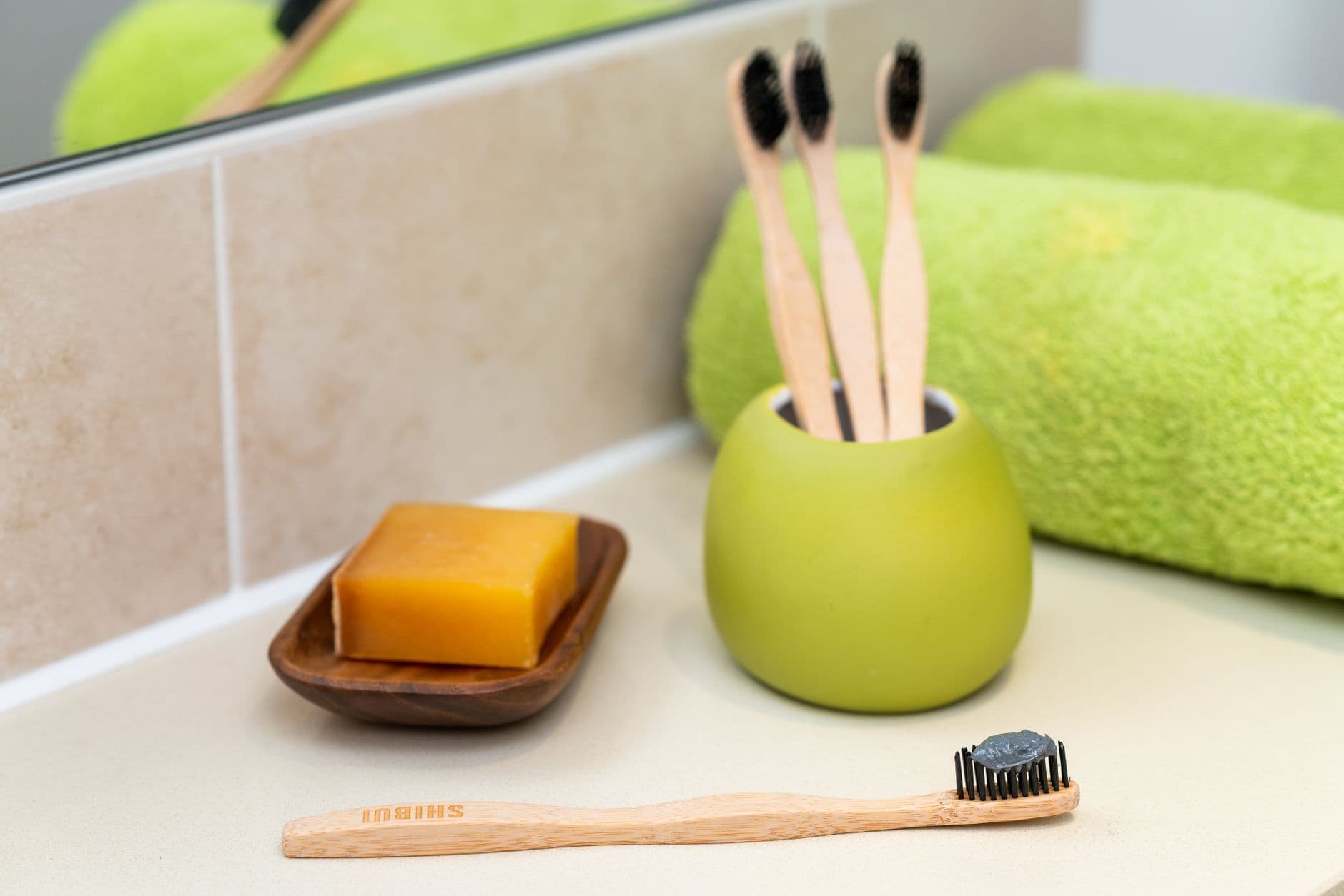
Charcoal has had quite the decade. It showed up in your face wash, your lemonade, your pizza crust, and inevitably, your toothbrush. Charcoal-infused bristles are everywhere now, usually marketed with words like "detoxifying," "whitening," and "deep clean." But when you strip away the black packaging and the moody Instagram aesthetic, does the science actually back any of that up? The honest answer is more complicated than either the brands selling them or the skeptics dismissing them would have you believe.
What Charcoal-Infused Bristles Actually Are
First, a quick clarification. Charcoal-infused bristles are not the same as brushing with loose activated charcoal powder, which is a separate (and more controversial) practice. These are nylon bristles that have been embedded or coated with activated charcoal particles during manufacturing. The idea is that activated charcoal, known for its porous structure and adsorptive properties, will grab onto bacteria, stains, and other debris in your mouth more effectively than plain bristles.
Activated charcoal itself is a legitimate material with real medical applications. Emergency rooms use it to treat certain types of poisoning because it binds to toxins before they can be absorbed. That part is not hype. The question is whether that same mechanism translates meaningfully to what happens between your toothbrush and your molars.
What the Research Actually Says
Here's where things get genuinely murky. The American Dental Association has not given its Seal of Acceptance to any charcoal-based dental product, and has noted that there is insufficient clinical evidence to support the safety and efficacy claims commonly made about them. That is not the same as saying charcoal does nothing. It means the research is thin, inconsistent, or both.
A review published in the British Dental Journal examined charcoal dental products broadly and found the evidence for whitening and antibacterial benefits to be limited. Some studies showed modest antibacterial effects in controlled lab settings. Others showed no meaningful difference compared to standard bristles. The gap between a petri dish and your actual mouth is wide, and that gap tends to swallow a lot of promising in-vitro results.
On the whitening claim specifically: activated charcoal can adsorb some surface stains, which is plausible given its chemistry. But research suggests the mechanical action of brushing itself, combined with toothpaste abrasives, is doing the heavy lifting there. The charcoal may be getting credit for results that standard brushing technique would produce anyway.
The Legitimate Concern Worth Knowing
There is one area where the skepticism is well-founded and worth taking seriously. Activated charcoal can be abrasive. When it is embedded in bristles, the abrasivity tends to be lower than using charcoal powder directly, but it is not zero. The ADA and dental researchers have flagged concerns that repeated use of highly abrasive charcoal products can wear down enamel over time. Enamel does not grow back. That is not a small footnote.
The good news is that bristle-embedded charcoal is generally considered less risky on this front than powder or paste formulas. But if you are already using a whitening toothpaste with its own abrasives, layering charcoal bristles on top is worth thinking about. More is not always more when enamel is involved.
So What Are the Bristles Actually Good For?
Fair question. Here is a more grounded way to think about it. Brushing effectively has always been the main event. The ADA recommends brushing for two minutes, twice a day, with soft bristles. Notice what is not in those guidelines: a specific bristle material, an infused coating, or a particular color of toothbrush.
Research consistently shows that most people do not brush long enough or thoroughly enough, regardless of what their bristles are made of. Technique and time matter far more than bristle additives. A charcoal-infused toothbrush used sloppily for 45 seconds will clean your teeth worse than a plain nylon brush used properly.
That said, if charcoal bristles make someone more excited about brushing and they end up brushing longer, that is a real and non-trivial benefit. The placebo effect on behavior is underrated in dental hygiene.
The Eco Angle, Since We're Here
One thing the charcoal conversation often skips: what else is going into those bristles, and what happens to the brush afterward? A lot of charcoal toothbrushes lean into a "natural" aesthetic without being particularly sustainable in their materials or packaging. Activated charcoal itself is often derived from bamboo, coconut shells, or coal, and the environmental footprint varies significantly depending on the source.
At Brush Club, when we think about bristle choices, the sustainability question is always part of the conversation alongside the performance one. It is worth asking both questions together rather than treating "natural-looking" as equivalent to "low impact."
If you want to browse what thoughtful bristle and handle choices can look like, our shop is a reasonable place to start.
How to Actually Evaluate Any Toothbrush Claim
Given how much noise exists in the oral care aisle, a few filters help:
Look for ADA acceptance. It is not the only signal, but it means a product has cleared a real evidentiary bar, not just a marketing one.
Be skeptical of "detox" language. Your saliva, liver, and kidneys are already handling detoxification. Your toothbrush does not need to.
Check for third-party testing. Some brands commission independent studies; many do not. The difference matters.
Ask what problem you are actually trying to solve. Surface stains? Gum health? Sensitivity? Different issues have different solutions, and a trendy bristle coating is rarely the most targeted answer.
Prioritize softness. The EPA has flagged improper oral care product use as a contributor to unnecessary health risks, and dental researchers broadly agree that medium or hard bristles cause more gum recession and enamel wear than most people realize. Soft bristles, used well, win almost every time.
The Bottom Line
Charcoal-infused bristles are not a scam, exactly. The underlying material has real properties that are at least theoretically relevant to oral hygiene. But the gap between "theoretically relevant" and "meaningfully better than your current toothbrush" is large, and the marketing around these products tends to leap across that gap without looking down.
If you have one and you like it, there is probably no harm in using it, provided it has soft bristles and you are not stacking other abrasive products on top. If you are considering buying one because you saw a compelling ad about toxin removal or dramatic whitening, the evidence does not really support that level of enthusiasm.
The most boring advice remains the truest: brush for two minutes, twice a day, with a soft-bristled brush you actually like using. That part, the research supports clearly.
Hotels and gyms sourcing brushes in bulk can also find responsibly made options through our wholesale program, where sustainability specs are part of the conversation from the start.
Charcoal bristles might be fine. They are probably not magic. And now you know enough to make that call yourself.
Photo by Aaron Crowe on Pexels.
Sources
Related Articles
Ready to Make a Difference?
Start your sustainable oral care journey with our eco-friendly dental kit. Reduce plastic waste while maintaining excellent dental health.