Sustainable Oral Care During Pregnancy: What to Swap and What to Keep
Pregnancy has a way of making you read every label in your bathroom cabinet. Suddenly that tube of toothpaste you've used for a decade looks suspicious. And if you were already leaning toward more sustainable products before the positive test, this season of scrutiny can send you deep into ingredient lists and Reddit threads at 2am.
Good news: your oral care routine is one of the easier areas to clean up. There are a few things worth swapping, a few things worth keeping exactly as they are, and almost no reason to panic about any of it.
Why Oral Health Gets More Complicated During Pregnancy
Hormone shifts during pregnancy, especially rising progesterone levels, change how your gum tissue responds to plaque. Research suggests pregnant people are significantly more susceptible to gingivitis, a condition sometimes called pregnancy gingivitis, and that untreated gum disease may be associated with preterm birth risk. The American Dental Association recommends keeping up with cleanings throughout pregnancy and actually scheduling one if you haven't already.
The point here isn't to scare you. It's to say that now is not the time to loosen up your routine in the name of going green. The goal is to swap thoughtfully, not to strip your routine down to wishful thinking and baking soda.
What to Keep: Fluoride Toothpaste
This is the big one. Fluoride is the most reliably effective cavity-prevention tool we have, and both the ADA and the American College of Obstetricians and Gynecologists consider fluoride toothpaste safe during pregnancy when used as directed (meaning you're not eating it by the spoonful).
There's a growing market for fluoride-free "natural" toothpastes, and some of them are genuinely lovely products. But research does not currently support fluoride-free pastes as equivalent cavity protection. Pregnancy increases your cavity risk because of dietary changes, morning sickness exposing your teeth to stomach acid, and dry mouth from certain prenatal vitamins. This is not the moment to experiment with protection levels.
Keep the fluoride. Everything else is negotiable.
What to Keep: Your Dental Appointments
Some people avoid the dentist during the first trimester out of caution. The ADA's guidance is clear: routine dental care, including X-rays when necessary and local anesthesia, is safe throughout pregnancy. Delaying treatment often causes more harm than the treatment itself.
Tell your dentist you're pregnant. They'll adjust positioning if needed, skip elective procedures, and keep things moving efficiently. That's it.
What to Swap: Your Plastic Toothbrush
A conventional plastic toothbrush is one of the easiest swaps you can make, and pregnancy is as good a moment as any to make it. The EPA estimates that roughly one billion plastic toothbrushes end up in U.S. landfills each year. They don't biodegrade. They just accumulate.
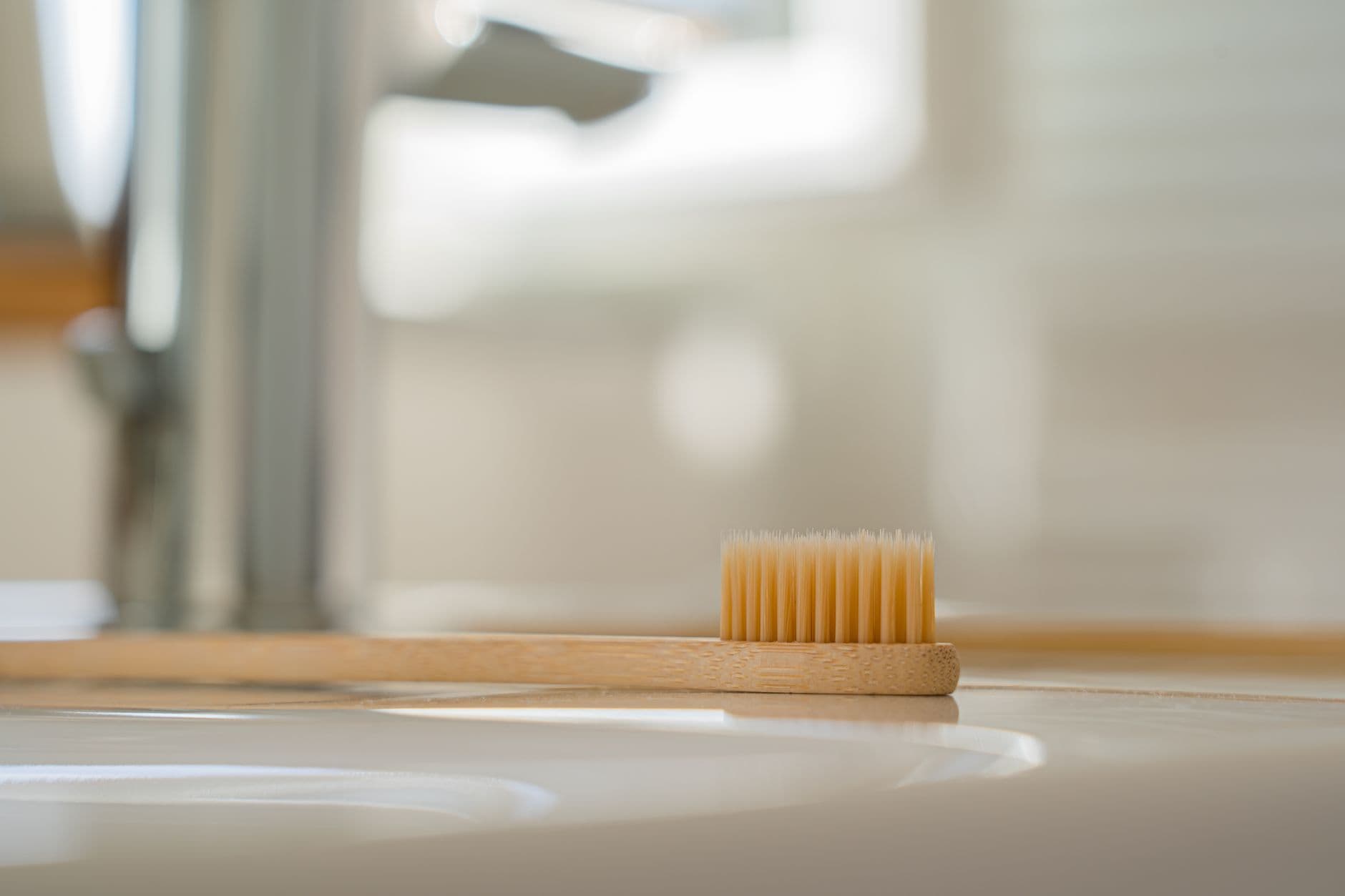
Bamboo toothbrushes with BPA-free nylon bristles are the current practical gold standard for eco-conscious brushing. The handle is compostable (remove the bristles first), the brush itself performs comparably to plastic for plaque removal when used with proper technique, and there's nothing in a bamboo handle that raises any pregnancy-specific concern.
If you want soft bristles, which dentists generally recommend anyway, you'll find plenty of options. At Brush Club we stock bamboo brushes specifically because the soft bristle options hold up without shedding or fraying faster than their plastic counterparts.
Brush twice a day, replace every three months, and you're doing it right regardless of what the handle is made of.
What to Swap: Single-Use Plastic Floss Picks
Those small plastic floss picks are hard to argue for environmentally. They're a single-use item made from materials that will outlast you and your future child by centuries. And during pregnancy, when gum sensitivity is elevated, the aggressive angle some people use with picks can actually irritate tissue more than traditional floss.
Swaps worth trying: a refillable floss holder, a water flosser (research suggests these are effective for gingivitis), or plain silk or plant-based floss. All of these are pregnancy-safe and skip the disposable plastic.
If flossing is genuinely painful due to pregnancy gingivitis, don't stop entirely. Tell your dentist. Bleeding gums are a signal to be gentler and more consistent, not to give up.
What to Swap: Conventional Mouthwash (With Caveats)
This one requires nuance. If your dentist has prescribed a specific rinse for gum health, keep using it and don't substitute. But if you're using a conventional alcohol-based mouthwash as a general freshness habit, it's worth reconsidering.
High-alcohol mouthwashes cause dry mouth with repeated use, and dry mouth during pregnancy already tends to be a problem. There are alcohol-free fluoride rinses that give you the cavity protection without the drying effect. Or skip the rinse entirely. Brushing and flossing are the workhorses. Mouthwash is supplemental.
As for oil pulling and charcoal rinses, which circulate constantly on wellness social media: there's not strong evidence for either as replacements for conventional oral care, and the abrasiveness of charcoal products is a concern for enamel. The "natural" label doesn't automatically make something safe or effective.
What to Think About: Your Toothpaste Ingredients
If you want to reduce your synthetic ingredient load without giving up fluoride, that's entirely possible. Look for toothpastes that skip artificial dyes, sodium lauryl sulfate (SLS, which can trigger canker sores in people prone to them), and triclosan (an antibacterial agent that's been phased out of many products following EPA and FDA scrutiny).
There are fluoride toothpastes on the market now that have clean, minimal ingredient lists. You don't have to choose between efficacy and simplicity. Read labels, look for ADA acceptance, and find something that works for your mouth and your values.
A Quick Note on Morning Sickness
If you're dealing with frequent vomiting, resist the urge to brush immediately after. Stomach acid softens enamel temporarily, and brushing right away can do more damage than waiting. Rinse with water or a fluoride mouth rinse, then wait 30 to 60 minutes before brushing. It feels counterintuitive, but your enamel will thank you.
The Short Version
Pregnancy is a reasonable time to audit your bathroom for unnecessary plastic and synthetic ingredients. But "sustainable" and "effective" need to coexist here. Keep the fluoride. Keep the dental appointments. Swap the plastic toothbrush, ditch the disposable floss picks, and be skeptical of anything that promises natural wellness while quietly asking you to skip evidence-backed protection.
Your oral health directly affects your overall health during pregnancy. The swaps worth making are the ones that don't ask you to trade efficacy for aesthetics. Most of them don't. You can have both.
If you're looking for a place to start with the physical swaps, the wholesale and starter kits we put together are built around exactly this kind of practical, low-friction upgrade. But wherever you source your products, the framework is the same: keep what works, replace what's wasteful, and don't let anyone talk you into ditching fluoride.
Photo by Castorly Stock on Pexels.
Sources
Related Articles
Ready to Make a Difference?
Start your sustainable oral care journey with our eco-friendly dental kit. Reduce plastic waste while maintaining excellent dental health.